 by
by The birthplace of Errol Flynn is a small seaside suburb in Tasmania, about as far from the glamour of Hollywood as it is possible to go.

At the height of his fame in the 1930s, Errol Flynn was the highest paid actor in Hollywood, and one of the most famous people on Earth.
Handsome, debonair, yet still masculine, Flynn’s star had risen in a series of action-adventure movies, where he played pirates, soldiers, and cowboys. In 1935 he was the titular character in ‘Captain Blood’, one of the definitive swashbucklers; in 1938 he played ‘Robin Hood’, a well received version of the classic tale, that was its best known depiction for decades.
As movies extablished themselves as the most popular mass entertainment medium, Flynn was one of its biggest draws.
His journey to the apex of fame had begun modestly, on the other side of the world. Flynn was originally from ‘Battery Point’, in the suburbs of Hobart, Tasmania.

Battery Point is one of Australia’s oldest suburbs. The first resident was Reverend Robert ‘Bobby’ Knopwood, who arrived in 1804 with the party that established the European settlement.
Knopwood – who was the only magistrate as well as the only religious minister – was important enough to be granted 30 acres of land on a gentle hill overlooking the town. Here he built a stone cottage, and set about surrounding it with lavish gardens.

After ten years of robust city development, the local authorities began to realise how generous the grant given to Knopwood was.
They gradually claimed land around his property, and installed canon and a military barracks overlooking the harbour; this gave the area a name, ‘Battery Point’. Knopwood himself experienced financial difficulties, and began selling parcels of his remaining land to private investors.
In 1829 he sold his cottage and the remains of his garden, and retired to the countryside.
By this time, Hobart had established itself as a successful port and agricultural trading centre. Adjacent to the port, with views over the water, Battery Point became an affluent, tight knit community.

The Queen Alexandra Hospital, on Hampden Road, opened in Battery Point in 1908.
This was the city’s first maternity hospital; prior to this, babies had normally been born at home. But high mortality rates, and concerns about midwife training, had lead to calls for a dedicated hospital.
As well as caring for newborns and their mothers, Queen Alexandra also served as a teaching academy for the state’s midwives.
The year after the hospital opened, a young, recently married couple moved to Hobart from Sydney.
Theodore Flynn was a university professor, who specialised in biology and natural science. In 1909, he and his wife Lily moved to Hobart, so Theodore could take up a teaching position.
They also wanted to start a family. In June, their first child, Errol Leslie, was born at the Queen Alexandra hospital.

The young family set up house in Sandy Bay, adjacent to Battery Point.
A beach, Sandy Bay, was not far away and I was often there, swimming from the age of three. The beach was of hard brown sand, the water freezing cold. Mother was a good swimmer, and she took me there very often.
Errol Flynn
Lily had another connection to the ocean as well. One of her ancestors, Midshipman Edward Young, had sailed on the Bounty and taken part in the famous mutiny, eventually ending up on Pitcairn Island with Fletcher Christian.
Lily had been bequeathed a sword, supposedly one of Captain Bligh’s, that hung on the wall in the Flynn home in Sandy Bay.

Flynn was also influenced by his father, who took his interest in nature outside of the classroom and into the field.
The pristine wilderness of Tasmania was the perfect environment, Flynn would recall many afternoons and weekends spent hiking through the bush, cataloguing flora and fauna, and collecting specimens. The backyard of the Flynn household became something of a small zoo, with a Tasmanian Tiger, Tasmanian Devils, and other exotic animals kept for further study.
The rugged life in a small community, his outdoors loving parents, and tales of adventure on the high seas, all made a large impression on young Errol:
The two main streams of thinking in the family were of the earth; the primordial creatures in the nearly impenetrable Tasmanian wilderness, and the eternal oceans. My primary interest became the sea. I would listen to anyone who would talk of it.
Errol Flynn
This environment would also encourage a rebellious streak.

Tall and strong, Flynn was a vigorous young man, outspoken, hard to control.
He railed against authority, a trait that would see him expelled from a number of schools in Hobart. His classmates have described him as ‘a disturbing influence’, ‘a devil’ and something of a classroom Don Juan.
One of his expulsions was caused when he was caught having sex, and he would often brag to his classmates about teachers and staff members that he had seduced.
But school for Errol Flynn was only ever a distraction. He craved adventure.
By the time he finished school, at age 18, he felt he had outgrown ‘Sandy Bay’, and set out to see the world.
He started in Sydney, where he parlayed a minor job in the office of a shipping company into an opportunity to work in New Guinea. There he became a plantation overseer, managing copra and tobacco fields, and would also try his hand at gold prospecting. He earned enough money to buy his own ship, the ‘Sirocco’, which he sailed to Sydney and back, in 1930. When he had free time he wrote columns on life in the jungle for the Sydney Bulletin.
But this idyllic lifestyle didn’t last long.
Always a spendthrift, Flynn had difficulty managing money, and soon ran up significant debts in New Guinea. In 1932 he retreated to Sydney to escape his creditors, and now found himself at an important juncture in his life. It was time for a change of direction.
Flynn’s interest in the arts, though not pronounced at this time, had also come from his mother.
Mother played the piano. She sang. She danced. Apparently she had theatrical ambitions. Once a theatrical group came through Hobart, and mother was paid to do a swimming bit.
Errol Flynn
Flynn’s artistic horizons, surprisingly, had also been expanded in New Guinea, where he had appeared on screen in an American documentary.

Back in Australia, this newfound interest found expression in a local film production; ‘In the Wake of the Bounty’. Handsome and debonair, although with virtually no acting experience, Flynn was cast as Fletcher Christian. He was discovered, in the best spirit of movie history, entirely by accident; cast member John Warwick ran into him and thought he had the right look for the part.
The production itself was troubled. Director Charles Chauvet had ambitions beyond his modest experience, and had set about trying to make both a dramatic re-enactment of the mutiny, and a documentary about the survivors. He spent three months shooting on location on Pitcairn Island, one of the world’s most isolated spots, risking his life to shoot from clifftops and small boats. When Chauvet arrived in Sydney, his hard won footage was confiscated by customs, which lead to a protracted legal dispute.
Unfortunately, the film was not successful, and Flynn’s performance not considered especially noteworthy. But he now had the acting bug.

The following year, 1933, Flynn moved to England, specifically to further his acting career. He found work in small parts in films and theatre, largely playing ‘exotic’ characters and heavies. In 1934 he secured a place in the Northampton Repertory Theatre, a professional gig that would provide training as an actor, as well as parts. This lasted nearly a year, and lead to more roles in British films.
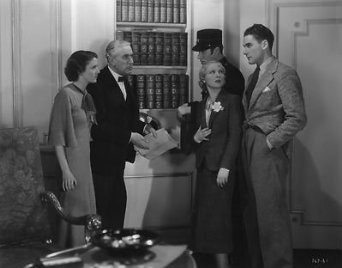
One of these, ‘Murder at Monte Carlo’, was seen by a talent scout from Warner Bros, Irving Asher. While the film was, again, not especially distinguished, Asher was struck by Flynn’s appearance. Asher arranged a contract for Flynn, and he was on his way to Hollywood. The following year, 1935, Flynn would appear in ‘Captain Blood’ and would instantly become one of the world’s biggest movie stars.
He never returned to Australia, and his official studio bio (at first) listed his ancestry as Irish.
Controversy was never far away, even during his time at the top. Over the next two decades, Flynn would be accused of violent brawling, assault, promiscuity, and public drunkenness, and had a reputation as difficult to work with. This is perhaps no surprise; looking back at his early years in Hobart, most of these tags could have been applied to him as a teenager.

Flynn’s birthplace in Battery Point is not marked, but the foreshore in Sandy Bay, mentioned above, is now fronted by ‘Errol Flynn Reserve’; a tiny reminder, of this most famous Tasmanian’s origins.
